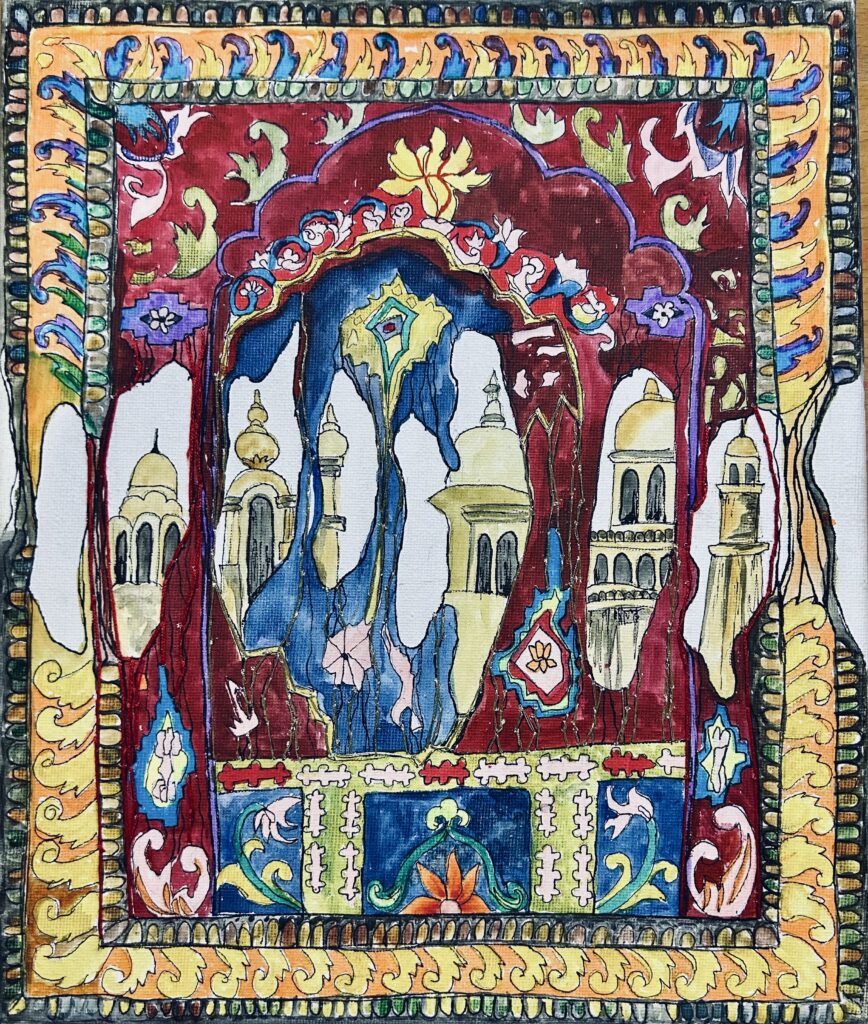
Shivangi is a mixed-media and textile artist whose practice explores women’s livelihoods, emotional landscapes, and lived experiences. All fabrics and textile elements in her artworks are created by her own hands, making each piece deeply personal and unique. Her work combines contemporary art with textile-based techniques, using fabric, texture, and layered materials to create expressive and tactile surfaces that reflect both personal emotions and collective stories of resilience, identity, and strength. Textile plays a central role in her creative process, carrying cultural memory, labour, and history. By integrating traditional craft practices with mixed media, Shivangi creates original artworks that bridge the space between fine art and textile traditions.
See Shivangi’s work as part of our annual summer open call exhibition, Melting Point. While days grow long and shorts shorten, Six Foot Gallery is delighted to host twenty nine artists exploring art as an alchemical process; the heat of summer as an artistic catalyst, plus our Sextet listening station is back with twenty-one new pieces for you to spend some quality time with.
Hi Shivangi! Tell us about your artistic journey?
My artistic journey began with a fascination for handmade textiles and the stories embedded within them. Growing up surrounded by craft traditions, I was drawn to the textures, techniques, and cultural narratives that fabrics carry. This curiosity eventually led me to study textile design and spend years working closely with artisans, learning not only the technical aspects of craft but also the value of preserving and reinterpreting traditional knowledge for contemporary audiences. The themes in my work emerge from an ongoing exploration of identity, heritage, memory, and craftsmanship. I am particularly interested in how traditional techniques can be translated into contemporary contexts without losing their cultural significance. My work often reflects the dialogue between past and present, handmade and industrial, local and global.
Can you walk us through your creative process?
My process usually begins with research and observation. I collect visual references, historical narratives, materials, and craft samples that resonate with a particular idea. From there, I sketch, experiment with materials, and develop samples through embroidery, weaving, printing, or surface manipulation. The making process itself often reveals unexpected directions, so I allow room for intuition and discovery before refining the final piece. Over time, my practice has become more research-driven and collaborative. Earlier, I focused primarily on aesthetics and technique, but now I place equal importance on storytelling, sustainability, and the human connections behind craft production. Working with artisans has also taught me to embrace slower, more thoughtful ways of making.
What emotions or reactions do you hope viewers experience when they see your artwork?
I hope viewers feel a sense of curiosity and connection. I want them to pause, look closely, and discover the layers of labour, history, and storytelling embedded in the work. If the piece encourages reflection on craft, culture, or personal memory, then it has achieved its purpose.
Are there specific advantages or challenges associated with working in your chosen mediums?
Textiles offer incredible versatility and tactile richness, allowing stories to be communicated through texture, structure, and materiality. However, textile processes can be time-intensive and technically demanding. I regularly experiment with mixed media, drawing, digital tools, natural dyes, and various surface techniques to expand my creative vocabulary. One of the recurring challenges is balancing traditional craftsmanship with contemporary design expectations. I overcome this through extensive prototyping and dialogue with artisans, allowing both innovation and tradition to coexist within the final work. Technical challenges often become opportunities for new discoveries.
What do you do to keep motivated and interested in your work?
Continuous learning is essential to my practice. I stay motivated by exploring new techniques, collaborating with artisans and creatives from different disciplines, and engaging with cultural research. Each project becomes an opportunity to ask new questions and expand my understanding.
Will your next project be a continuation of your current style or are you experimenting with something different?
My next project builds on my ongoing interest in traditional Indian craftsmanship while exploring new ways of presenting textile narratives. I am particularly interested in combining heritage techniques with contemporary forms and sustainable approaches to material development. While it remains connected to my current practice, it also pushes into new territory through experimentation and collaboration. At the heart of my work is a deep respect for craftsmanship and the communities that sustain these traditions. I see my role not only as a designer or artist but also as a collaborator, helping to create meaningful connections between heritage skills and contemporary audiences. I am currently developing new textile-based projects and collaborations that explore traditional Indian craft practices through a contemporary lens. I look forward to sharing upcoming exhibitions, workshops, and partnerships that continue this dialogue between culture, craft, and design.
Find out more about Shivangi’s work on Instagram. Melting Point runs at Six Foot Gallery until Thursday 9th July.
Leave a Reply